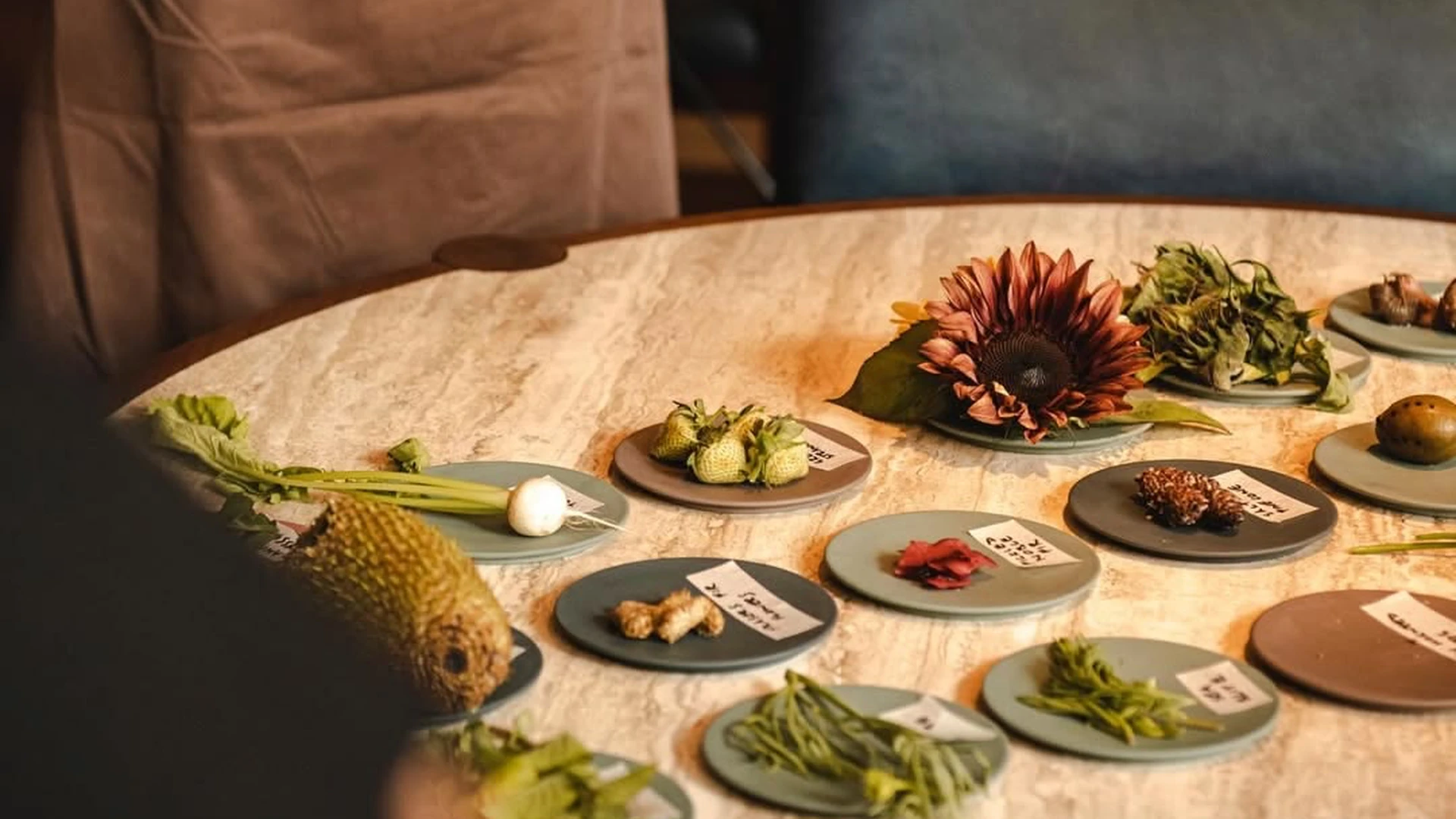
We often remember places through moments at a table: an arrival drink, a long lunch, a conversation at the counter or a meal connected to the landscape around us. Food and beverage can become one of the most immediate ways people understand a destination.
A restaurant is sometimes treated as an operational requirement or an interior design exercise. But its potential is broader. It can express a place’s identity, introduce local producers, support programming and create different forms of social interaction across the day.
Aroha approaches F&B as part of the concept, not as a tenant or amenity selected after the wider project is complete.
Start with the idea.
What should this venue mean to the audience? A neighbourhood gathering place, a destination for discovery, a teaching kitchen and a quietly restorative dining room require different spatial and operational responses.
Menu, service, setting and story should come from one clear proposition rather than a collection of attractive references.
Design the daily rhythm.
A space can serve different needs across the day: coffee in the morning, a working lunch, an afternoon meeting, a chef experience or evening drinks. Those transitions influence circulation, furniture, acoustics, lighting and staffing.
Thinking about the complete rhythm can make a concept more useful and give people more than one reason to visit.
“The most memorable table is often the one that tells you where you are.”
Make the experience participatory.
A kitchen can become a classroom. A garden can become a source of ingredients and conversation. An apothecary concept can combine food, retail and learning. A bar can explore ritual and mood beyond alcohol.
These possibilities turn food and beverage into an encounter with ideas, people and place.
Five dimensions of an F&B concept
- 01Identity
A clear reason for the venue to exist.
- 02Audience
An understanding of who the experience serves.
- 03Rhythm
A programme that works across the day.
- 04Participation
Ways for guests to connect with people and process.
- 05Viability
A concept that can be operated, adapted and sustained.
Connect culture with commercial thinking.
A distinctive concept still needs to work. Audience, pricing, programme, operations, partnerships and revenue opportunities belong in the creative process from the beginning.
The objective is not simply to produce a visually compelling venue. It is to create a proposition that can sustain its identity through everyday use.
When food becomes part of the place rather than an afterthought, a restaurant can become a destination in its own right.