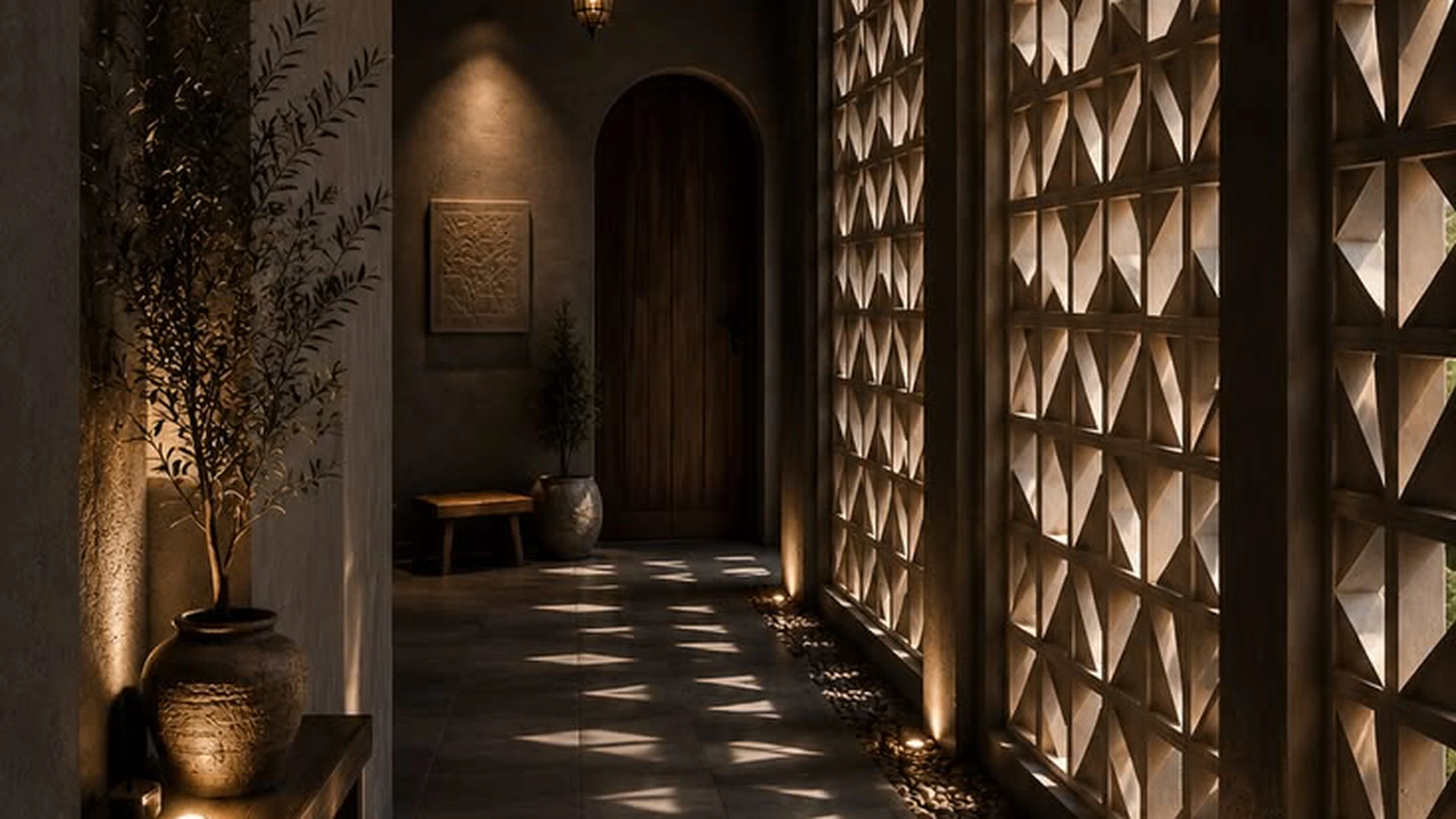
Architecture is frequently presented in daylight or under a complete wash of artificial illumination. Yet darkness is not simply an absence to correct. It can give shape to atmosphere, privacy, orientation and the experience of place.
The relationship between light and darkness matters in homes, hotels, workplaces and landscapes. It is especially significant when the identity of a destination is tied to a natural environment and the rhythm of the day.
At Aroha, the question is not whether a place should be dark or bright. It is how each condition can be used deliberately, and how the transition between them becomes part of the experience.
Begin with contrast.
A softly lit path feels different from a brightly illuminated lobby. A sheltered corner feels different from an open terrace. Contrast can help people recognise changing uses and atmospheres without relying only on signs or decoration.
More illumination is not always more clarity. A thoughtful hierarchy of light can make the important parts of a place easier to understand.
Protect the experience of night.
In a remote destination, the night sky can be one of the most distinctive elements of the landscape. Excessive lighting may erase the very quality that made the place worth visiting.
Careful placement, shielding, timing and control of artificial light can help a project accommodate activity while remaining attentive to its surroundings.
“Darkness can reveal qualities of a place that constant illumination leaves unseen.”
Let rooms change their character.
A hospitality space may be energetic at one moment and intimate at another. Lighting strategy can support that transition across restaurants, arrival areas, bedrooms and places for gathering.
The aim is not theatrical effect for its own sake. It is to create a coherent sequence of experiences that responds to how people use the space.
Five ways to work with night
- 01Hierarchy
Light what is needed, rather than everything equally.
- 02Transition
Design movement from active to quiet spaces.
- 03Control
Allow environments to change with time and use.
- 04Landscape
Respect the identity of the night-time setting.
- 05Atmosphere
Use light and shadow as part of spatial character.
Consider the whole environment.
Lighting cannot be resolved as a fixture specification alone. Architecture, landscape, materials, views, operations and local context all influence what works.
A night-time strategy should be developed early enough to shape those decisions rather than added when everything else is finished.
The future of lighting design may depend as much on what we choose not to illuminate as on what we do.