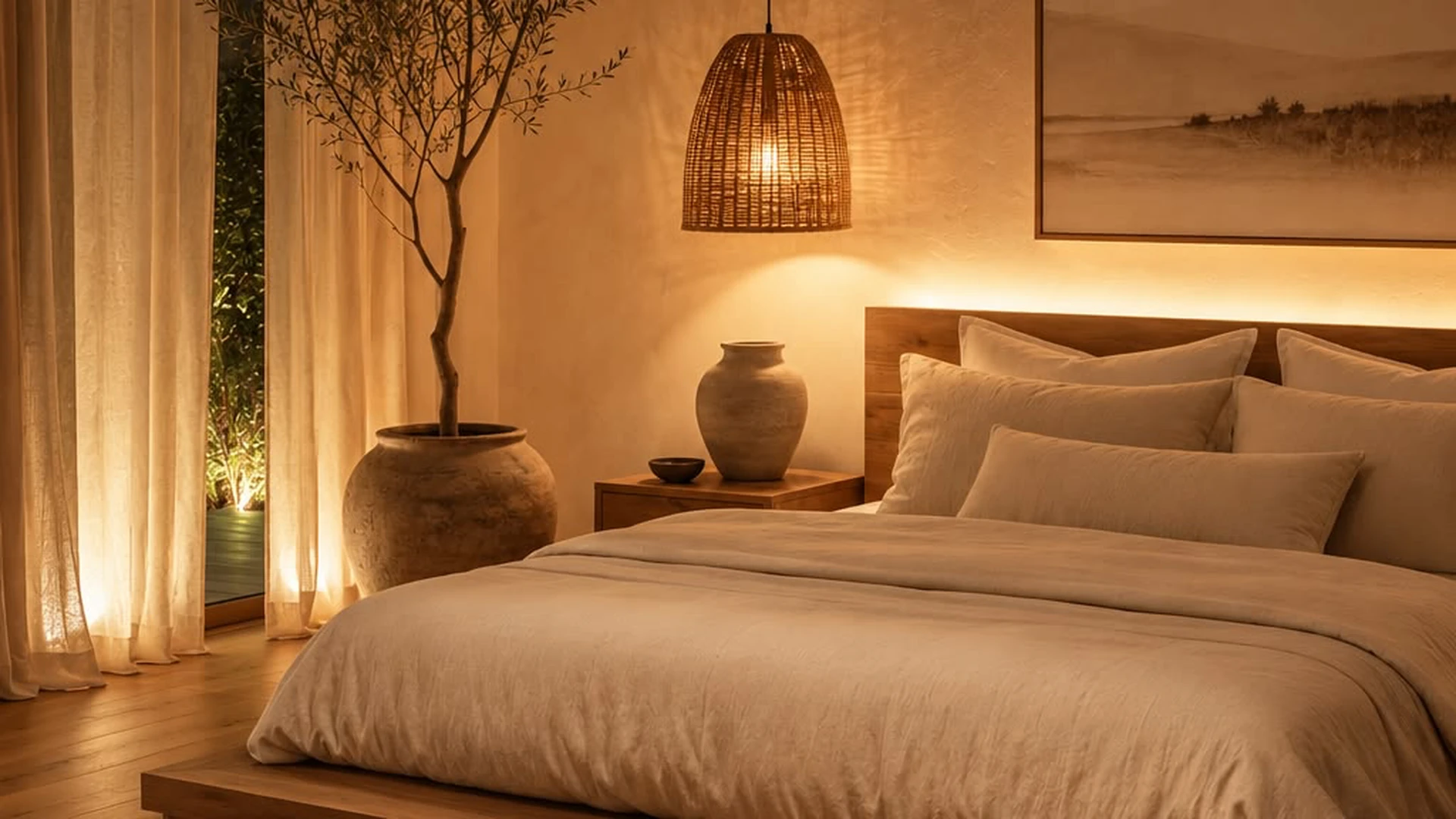
A bedroom is more than a room containing a bed. It is the setting for a period of the day when the outside world should recede and the body can settle into rest. Architecture cannot guarantee sleep, but it can take that purpose seriously.
Hotel rooms, private residences and wellness environments often devote considerable attention to visual atmosphere. Yet what happens after the lights go out is an equally important design question.
Aroha considers rest as part of the wider relationship between people and their surroundings. This begins with the environmental qualities of the room rather than the addition of a single sleep-focused amenity.
Light follows a daily rhythm.
Daylight and darkness are not interchangeable conditions. A space can support a clear contrast between an alert, active day and a calmer evening by considering orientation, shading, artificial lighting and user control.
Blackout and dimming options can be valuable, but so is an intuitive, comfortable way to bring daylight back into the room in the morning.
Acoustics shape the sense of refuge.
A room that looks peaceful may not sound peaceful. Noise from circulation, services, neighbouring rooms or the exterior can undermine the feeling of separation that rest requires.
Acoustic thinking needs to begin in planning and construction, not only with finishes. The aim is to create a quiet environment without making it feel detached or oppressive.
“A room should not merely look restful. It should be designed around the experience of rest.”
Comfort must be personal.
Temperature, ventilation, materials and privacy all contribute to how a room feels. Different users may prefer different conditions, so simple and reliable control can matter as much as an idealised preset.
The best technology is often the technology that does not complicate the experience. A guest should not need to decode a control panel to make the space comfortable.
Five environmental considerations
- 01Daylight
Consider orientation, glare, shading and morning light.
- 02Darkness
Provide intuitive ways to reduce light in the evening.
- 03Sound
Plan for privacy and acoustic separation.
- 04Comfort
Support personal control over temperature and airflow.
- 05Routine
Consider how the wider environment changes across the day.
Design beyond the bedroom.
The path to rest begins before entering a room. Evening lighting, sound, food, activity and circulation across a property can all contribute to a coherent change of pace.
This is why sleep-led thinking should inform the entire guest or resident journey rather than appear only as a feature within the bedroom.
Architecture cannot promise a perfect night’s sleep. It can, however, make rest a design priority instead of an afterthought.